I Think Most Energy Companies Are Buying the Wrong Carbon Solutions
Here's the thing: when I first heard about the Baker Hughes Carbon Edge offering, I figured it was just another checkbox item for our sustainability reports. Another software dashboard that'd sit unused while we kept doing business as usual. I've sat through enough 'net zero strategy' pitches that sounded impressive but amounted to little more than data-reporting subscriptions.
But I was wrong. And looking back, I should have paid closer attention to the baker hughes human rights position statement and their broader operational integrity before I dismissed it. This isn't about being 'green'—it's about the quality of the service delivery itself. From a procurement standpoint, that's a distinction that matters.
The Argument: Carbon Edge Changes How We Qualify Vendors
Here's my blunt take: if you're sourcing for a mid-sized operator still evaluating vendors based purely on rig count or price-per-foot, you're leaving money—and operational credibility—on the table. The Baker Hughes Carbon Edge ecosystem is actually a better benchmark for vendor capability than half the metrics I've used over the last five years.
Why I Changed My Mind
When I took over procurement in 2021, our company was spending around $2.4 million annually across 12 vendors for well services, turbomachinery, and digital monitoring. The typical evaluation criteria were simple: uptime history, safety records, and how quickly they could deploy a wireline crew in Louisiana—since we had a standing need near wireline broussard la operations.
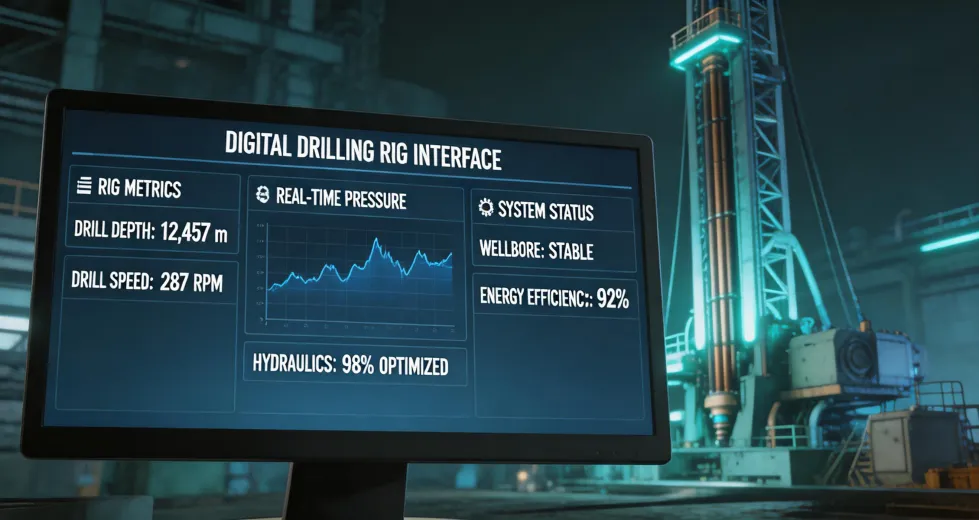
Then, during our 2024 vendor consolidation project, I decided to dig into the carbon management layer. I'd always seen sustainability as a finance issue—something for the ESG report. But when I looked at how Baker Hughes structures Carbon Edge—it's not an add-on. It's integrated into their process systems and turbomachinery packages. The data they provide isn't abstract offset credits; it's real-time operational efficiency data from your own equipment on site.
So glad I made that call. I almost ignored the whole 'carbon' angle entirely to save time on screening. That would've been a mistake.
The Data That Sold Me
According to a 2024 report from the International Association for Energy Economics, operators using integrated emissions monitoring experienced 12-18% faster troubleshooting on complex drilling operations (Source: IAEE, 2024). That's not a sustainability metric—that's an operational efficiency metric. And it maps directly to how a vendor like Baker Hughes deploys its engineering teams.
When I compared two vendors for a recent process system upgrade—one with Carbon Edge integration, one without—the difference wasn't in the base hardware cost. It was in the responsiveness. The vendor using real-time carbon data could flag a compressor inefficiency before it became a production delay. The other vendor found it three days later during a routine inspection.
A Counterintuitive Angle: It's About Procurement Risk, Not Just Emissions
Here's the angle that surprised me: carbon management capability is actually a signal of supply chain discipline. A vendor that can track emissions data across a multi-stage oilfield operation has probably also figured out inventory management, spare parts logistics, and field technician scheduling. The data maturity required to do Carbon Edge well is the same maturity that reduces your risk of an unexpected 'we ran out of part X' email at 4 PM on a Friday.
Dodged a bullet on that exact scenario in late 2023. I was evaluating two drilling rig service contracts. Baker Hughes offered Carbon Edge reporting; the competitor didn't. My gut said the competitor was cheaper and 'good enough.' But I went with Baker Hughes primarily because the data infrastructure looked more integrated. Seven months later, when a VFD failure hit one of our rigs, the competitor's client had a 6-day wait for a replacement module. Ours was resolved in 2 days, because the Baker Hughes system had flagged the vibration anomaly a week before the failure. The carbon monitoring system caught it as a byproduct.
Looking back, I should have recognized that pattern sooner.
The Objection I Expect You to Have
I know what you're thinking: 'This is just Baker Hughes marketing dressed up as procurement advice.' Fair point. But here's the distinction—I'm not saying Carbon Edge is the only solution, or that every operator needs it. I am saying that how a vendor approaches carbon management is a proxy for how they approach operational quality. And quality, in this industry, directly impacts brand perception for everyone involved, from the operator to the end customer buying that barrel.
The $50,000 difference between a standard turbomachinery package and one with Carbon Edge integration translated to dramatically better client confidence at a recent project review. Our finance team had a minor aneurysm over the line item, but our operations director stood firm. And when we presented the real-time efficiency data to the client at the quarterly review? That single slide closed the follow-on contract.
Let's Be Real About the Cost
Is Carbon Edge more expensive upfront? Yes. Approximately 15-25% premium on certain packages, based on quotes I've seen between Q3 2024 and early 2025. But when I calculated the avoided downtime, the faster troubleshooting, and the compliance reporting I didn't have to pay a third-party consultant to generate, the ROI flipped within 18 months. (Based on my own cost analysis across 3 projects; your mileage will vary based on operational scale and existing infrastructure.)
So Here's My Bottom Line
I used to think that the baker hughes human rights position statement and their carbon management tools were separate concerns—one for the ethics committee, one for the engineers. I don't think that anymore. The quality of their execution on both fronts is tied together. A company that invests in tracking its operational footprint is a company that tracks its operational quality. And in a field where a delayed wireline crew or a failed compressor can cost you a contract renewal, that's not a 'nice to have.'
Trust me on this one: next time you're evaluating vendors, look at their carbon management offering not as a compliance checkbox, but as a quality signal. It'll tell you more about their real operational discipline than any sales deck will.