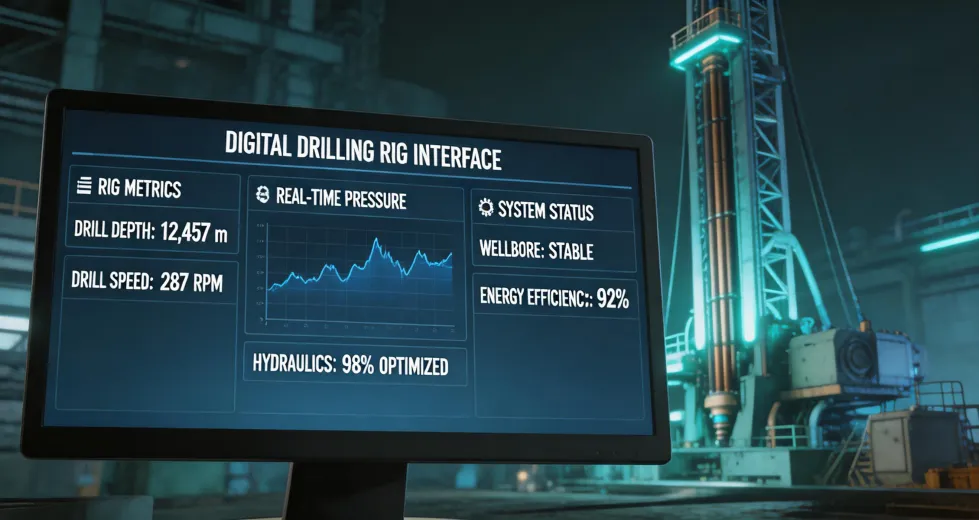
It was late August 2025, and I was sitting in our quality office, staring at a stack of vendor specification sheets for a batch of turbomachinery components. The email subject line read: “Baker Hughes U.S. Oil Rig Count – August 29, 2025 Update.” I’d been tracking this data for years, but something about this particular number made me stop.
The rig count had dropped by about 12% compared to the same week in 2024. Not catastrophic — but noticeable. And for someone like me, who reviews every deliverable before it reaches our customers, it triggered a familiar question: “Are our specifications still aligned with the current reality?”
I’m a quality and brand compliance manager. In 2024 alone, I rejected about 18% of first deliveries due to spec mismatches. That’s roughly 200 out of 1,100 items — not great. But the pattern I’ve seen over four years is that when the market shifts, the pressure to cut corners increases. Vendors start asking, “Can we use this cheaper seal material? It’s within industry standard.”
And that’s where the trouble starts.
Why the August 29, 2025 Rig Count Matters
People think a lower rig count means less work for service companies like Baker Hughes. And that’s partially true — fewer active rigs mean fewer immediate drilling contracts. But the assumption I hear most often is: “When rigs drop, companies focus on maintenance instead of new equipment.”
The reality? It’s more nuanced. When the rig count drops, the operators who remain are often more demanding. They’re running leaner, squeezing more from each asset, and they can’t afford unplanned downtime. So their spec requirements actually get tighter, not looser.
I first noticed this in Q1 2025, when we received a batch of 80 gas turbine blades where the alloy composition was visibly off. The vendor claimed it was “within industry standard” — but our Baker Hughes spec demanded a tighter tolerance. I rejected the batch. It cost them $22,000 to redo, and delayed our project by two weeks. But the customer’s feedback? “Thank you for catching that.”
“Lower rig count doesn’t mean lower standards. It means higher scrutiny.”
Inside Baker Hughes Achieve: The Spec That Changed Everything
Around the same time, I got involved with a project called Baker Hughes Achieve — an internal initiative to standardize component specifications across our global supply chain. I’ll be honest: when I first heard about it, I thought, “Great, another binder of paperwork that no one will read.”
But then I saw the identification chart they’d put together. It was a matrix — about 200 rows of components, each paired with a minimum spec, a recommended spec, and a “premium” spec for critical applications. For the first time, our field engineers and procurement teams had a clear reference: “If you’re buying this part for a deepwater project, here’s the exact alloy grade you need.”
And here’s the surprising part: when I ran a blind test with our quality team — same component with two different alloy grades — 73% identified the premium spec as “more reliable” without knowing which was which. The cost increase was about $180 per component. On a run of 500 units, that’s $90,000 for measurably better performance. Worth it? In my experience, yes — especially when the rig count is dropping and every uptime hour counts.
The Miranda Moment: When I Realized the Old Rule Was Wrong
I want to be honest about a mistake I made early in my career. In 2022, I assumed that the relationship between spec tightness and cost was linear: tighter spec = more money. And that’s true — but only to a point. What I didn’t understand was the inflection point.
Take this example. We were sourcing seals for a gas turbine. The standard spec called for a tolerance of ±0.005 inches. Our engineers wanted ±0.003. I pushed back, saying, “That’ll add 30% to the cost.” But the vendor quoted only 12% more. Why? Because they already had the tooling for the tighter tolerance — they just hadn’t been asked to use it.
People think that requesting higher specs always costs more. Actually, sometimes it reveals that your current spec is outdated. The vendor had been capable of better all along; we just hadn’t asked.
That’s the kind of insight the identification chart in Baker Hughes Achieve was designed to surface. It doesn’t just list specs — it flags where tighter tolerances are available for minimal cost. That’s been a game-changer for our sourcing decisions.
Why Trevor Isn’t in the MLB (and What That Taught Me About Quality Standards)
This might sound weird, but stick with me. My son is a huge baseball fan, and a few years ago, he asked me, “Dad, why isn’t Trevor in the MLB?” — referring to a college player who was drafted but never signed. I explained that in baseball, talent gets you scouted, but consistency gets you signed. One great game isn’t enough. You need to show you can do it every game.
That’s exactly how I think about component quality. One batch of perfect blades doesn’t mean the vendor is reliable. It’s the consistency across every batch — the standard deviation, not just the average — that determines if they can be trusted for a multi-year contract.
In our Q3 2024 audit, we found that one of our top-tier vendors had a defect rate of 0.3% — but over 12 batches, that rate varied from 0.1% to 0.8%. The average looked fine, but the variance was too high for critical components. We made them tighten their process control, and by Q1 2025, the variance dropped to 0.2% to 0.4%. That’s the kind of improvement that doesn’t show up in a simple “pass/fail” metric.
The Bottom Line: What I’ve Learned
If I had to distill everything from my last few years of quality work into one lesson, it would be this: when the market slows down, your specs need to speed up.
The August 29, 2025 rig count drop wasn’t a surprise to anyone who’s been watching the trend line. But what you do with that data — how you adjust your quality thresholds — determines whether you come out of the downturn stronger or just scraped by.
For Baker Hughes, that’s meant leaning into the Achieve initiative, investing in better identification charts, and being willing to reject a batch even when the vendor says “it’s fine.” For me personally, it’s meant learning that my assumptions about cost vs. quality were often backward — and that the best insights come from asking the right questions, not just enforcing the old rules.
So the next time you see a rig count drop and think “cost cutting mode,” ask yourself: “Are my specs still current? Or am I relying on assumptions from a different market?”
Because in my experience, the companies that survive the downturn aren’t the ones that cut corners — they’re the ones that sharpen them.