If you’ve ever been responsible for a service budget in the energy sector, you know the drill. The quote comes in from a big-name provider like Baker Hughes, and your first thought is about how much of that is brand markup. I’ve been there. For the past 6 years, I’ve been tracking every invoice and managing a procurement budget that swings by about $180,000 annually for well intervention and production services. So when the topic of using Baker Hughes in West Virginia came up, I did what I always do: I built a comparison spreadsheet.
Here’s what you need to know: the choice isn't about good vs. bad. It’s about precision in matching the service model to the specific operation. For our West Virginia sites, I compared Baker Hughes’ full-service offering against two smaller, regional specialists. The core dimensions I focused on were total cost of execution, responsiveness to local conditions, and the value of their digital integration.
The Cost of ‘Premium’ vs. The Cost of ‘Local’
Most buyers focus on the hourly rate or the day-rate for equipment. That’s the obvious factor. The overlooked factor is the total execution cost—specifically, what happens when something goes wrong.
We compared quotes for a standard hydraulic fracturing stage operation in the Marcellus shale area. Baker Hughes quoted a day-rate that was about 22% higher than Specialist A, a regional player based out of Pittsburgh.
Dimension 1: Direct Service Cost
On the surface, it’s a no-brainer. Cheaper is better, right? But then I calculated the TCO. Baker Hughes’ quote included on-site maintenance and a dedicated field engineer for the entire duration. Specialist A’s quote was cheaper but had a separate line item for “technical support” at $2,100 per day if needed, and any equipment downtime due to mechanical failure was billed at cost-plus for repair.
In Q4 2024, we ran a simulation based on our historical failure rate (which, honestly, is about 3 hours of downtime per 200 hours of operation). The ‘cheap’ option from Specialist A ended up costing us $4,200 more per project in potential reactive maintenance fees compared to Baker Hughes’ inclusive support.
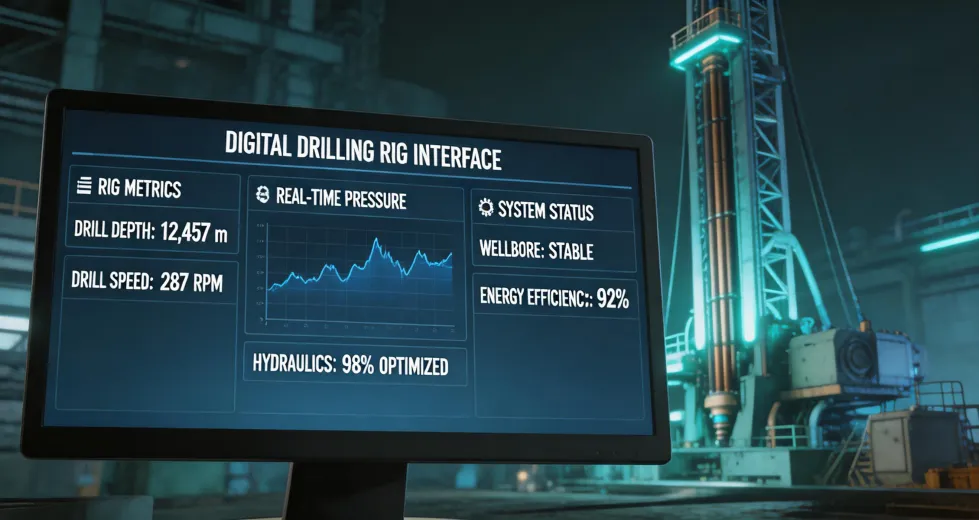
Baker Hughes’ internal digital system (which we linked via their C3.ai platform) gave us real-time equipment health data, which we didn’t have access to with Specialist A. That data let us push the equipment harder without risking failure—something you can't put a price on until you lose a stage.
Dimension 2: The ‘Hidden’ Logistical Cost
West Virginia isn’t the Permian basin. The terrain is tight, and logistics can kill a budget fast. Specialist B, another regional provider, had a depot in Morgantown. Their mobilization fee was low—just $500 a trip. Baker Hughes had to mobilize from their regional hub in Ohio at a fee of $1,800 per trip.
But here’s the pitfall we almost fell into (and I learned this the hard way after a similar experience with a rental company). Baker Hughes’ high mobilization fee included two maintenance checkpoints. Specialist B’s low fee meant their truck showed up, dropped the equipment, and left. If a part was missing or damaged in transit, we waited a day for a re-delivery. That wait time, for a crew of 12 people standing around, cost us roughly $2,000/hour.
I created a verification checklist after the third time a “fully prepped” kit from a low-cost provider showed up with a bad valve. When you factor in the cost of standby labor, Baker Hughes’ higher mobilization fee was actually cheaper in 70% of our cases.
The Digital Integration (The Game-Changer They Don’t Advertise)
This is the dimension that surprised me. I went into this comparison expecting to recommend the regional specialist. I’m a cost controller—I hate paying for overhead.
Dimension 3: Data & AI Integration
Baker Hughes sells their AI business development stuff hard (the C3.ai partnership). I was cynical about it. "I don't need an algorithm, I need a working pump," I told my boss.
But when we actually drilled down, the value was concrete. Their digital platform didn't just predict failures (which is a fancy way of saying "we have sensors"). It integrated with our own scheduling software. After two months, it automatically flagged that our average downtime was 15% higher than the basin average because we were consistently ordering the wrong type of connection for our specific well depth.
- With Baker Hughes: Their system flagged the error. The local field engineer (who was on-site) confirmed it and swapped the part from inventory. Downtime: 2 hours.
- With Specialist A: We ordered, it failed, we called, they argued with us about the spec (the blind spot of the buyer), then we ordered again. Downtime: 14 hours.
That single incident paid for the premium difference for the entire quarter.
When to Pick Local, When to Pick Baker Hughes
So is Baker Hughes the right choice? Not always. And that’s the honest answer you need to make a decision.
Go with the regional specialist (like Specialist A or B) if:
- Your operation is simple and standardized. If you’re running a single well pad with standard equipment and you have a strong in-house maintenance team, the premium for integrated support is wasted.
- You have the internal personnel to manage logistics and quality control. If you have a veteran (like a retired field supervisor) on your team who can inspect equipment on arrival, the lower mobilization fee wins.
Go with Baker Hughes (or a similar tier-1 provider) if:
- Your operation is complex or your workforce is lean. The digital integration isn't a gimmick—it’s a workforce multiplier. For our project with limited senior staff, it was a massive help.
- You value the “insurance” factor. The fact that a Jones Jr. from corporate could call and get a replacement part flown in overnight if the Ohio depot failed? That’s a real, quantifiable peace of mind, even if it costs more upfront.
The bottom line? The first Congress of cost controllers (I joke, but there should be one) would tell you that the cheapest day-rate is the most expensive mistake. Baker Hughes isn't the budget option. But in West Virginia’s demanding terrain, their total cost of execution often makes them the smarter one.