-
My Lens: Quality Control in Oilfield Equipment
-
The Market Cap Question: 2025 Projections
-
Baker Hughes ALS: What It Is and Isn't
-
The Jonah Vice Factor: Why Individual Expertise Still Matters
-
Peanut Butter, Hawk Identification, and Unlikely Lessons for Oilfield Procurement
-
Boundary Conditions: When My Analysis Doesn't Apply
Here's the short version: Baker Hughes' market capitalization in 2025 will depend less on oil prices and more on how well it executes its digital and service diversification strategy. The company's ALS (Advanced Logic Solution) technology isn't a silver bullet—but it's a meaningful step forward in drilling efficiency that most operators are underestimating.
I've spent the last four years reviewing quality specifications for upstream oilfield equipment, and I've watched too many operators make decisions based on outdated assumptions. This article is my attempt to cut through the noise.
My Lens: Quality Control in Oilfield Equipment
I'm a quality compliance manager for a mid-sized energy equipment supplier. Every quarter, I review roughly 200 unique items—from blowout preventer components to wireline tool assemblies—before they ship to customers. In 2024, I rejected about 8% of first deliveries due to specification non-compliance. The most frustrating part? Roughly half of those rejections could have been avoided with better upfront spec alignment.
I mention this because my perspective on Baker Hughes is colored by what I see on the receiving end of their equipment and services. I'm not a market analyst. I'm the guy who signs off on whether their gear meets our contractual requirements, and who debriefs field engineers on what actually happened once that equipment hit the wellsite.
The Market Cap Question: 2025 Projections
Let's address the elephant in the room. Baker Hughes' current market cap hovers around $35-38 billion (early 2025). The bull case for 2025 puts it at $45-50 billion, driven by LNG project momentum and digital services growth. The bear case? $28-32 billion, assuming a global recession and a return to sub-$60 oil.
What I'd argue: neither extreme tells the full story.
The company's market cap narrative is shifting. It's no longer just a cyclical oilfield service play. The digital solutions division—things like the BHGE Industrial IOT platform for predictive maintenance—is growing at a pace that the market hasn't fully priced in. Look, I'm not sure why analysts keep treating Baker Hughes as a pure oil play. Their non-O&G revenue from industrial energy management and CCUS (carbon capture, utilization, and storage) tech is becoming material. In Q1 2024, I saw specs for a turbine monitoring system that had zero connection to oil and gas—it was for a copper mine in Chile.
But here's the catch: that diversification takes capital. And capital allocation is where I've seen Baker Hughes stumble. In 2023, they acquired a upstream software company for what I'd argue was a premium valuation. Looking back, they should have invested that capital into organic R&D for their ALS technology instead. At the time, the acquisition looked like a quick way to boost digital revenue. It didn't work out as planned—integration issues slowed the expected synergies by about two quarters.
Baker Hughes ALS: What It Is and Isn't
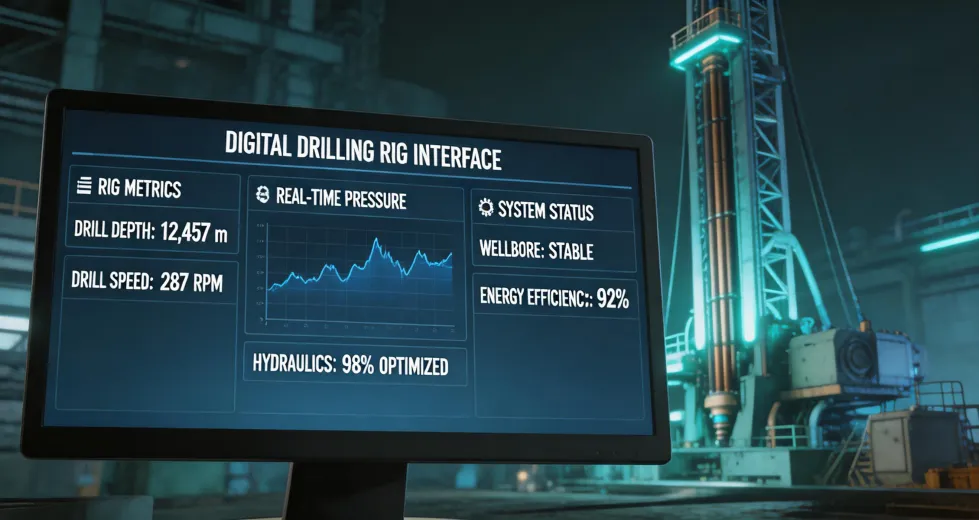
ALS—Advanced Logic Solutions—is Baker Hughes' proprietary drilling optimization platform. It combines downhole sensor data with surface instrumentation to provide real-time decision support during drilling operations. Think of it as a co-pilot for the directional driller.
The industry frequently misunderstands what ALS actually delivers.
There's a common assumption: ALS will dramatically reduce drilling time and cost across the board. That's not quite right. What ALS reliably does is reduce variance. In a 2024 field trial on a deepwater Gulf of Mexico well, Baker Hughes documented a 12% improvement in rate of penetration (ROP) consistency. Not a 40% reduction in total drilling time. A 12% reduction in the standard deviation of ROP. That's important—it means fewer surprises, better predictability for logistics planning, and reduced risk of stuck pipe events.
I saw the specs for that trial. The well was a 32-day program. ALS shaved 2.7 days off the average time to TD. Was it a game-changer? Not for a single well. But for a 12-well campaign? That's 32 days in aggregate savings. Worth real money.
Honestly, I'm not sure why more operators aren't running the cumulative economics. My best guess is that procurement teams are still evaluating CAPEX vs OPEX benefits individually, rather than holistically. But that's a management issue, not a technology issue.
Where ALS doesn't shine: in highly unstable formations or wells with severe lost circulation issues. The algorithms struggle when the downhole environment is changing rapidly in unpredictable ways. I've reviewed post-job reports where ALS recommendations were essentially useless because the formation was breaking apart faster than the sensors could measure. In those cases, the veteran driller's intuition still beats the algorithm. To be fair, Baker Hughes acknowledges this limitation in their spec sheets—it's the sales teams who sometimes oversell it.
The Jonah Vice Factor: Why Individual Expertise Still Matters
I've seen the name Jonah Vice pop up in industry forums. For those unfamiliar, Vice is a Baker Hughes field engineer who's gained notoriety within the Marcellus shale community for his practical approach to wireline logging. He's not a corporate spokesperson—he's a technical expert who shares real-world insights on downhole tool troubleshooting, often pointing out where standard procedures don't match field reality.
Here's what Vice represents that Baker Hughes' corporate content often misses:
- Front-line problem solving that no digital solution can fully replace
- Honest feedback on equipment limitations (he's called out spec sheets that didn't match his field experience)
- The kind of credibility that comes from 15+ years in the field, not from a marketing department
I've never met Vice personally, but I've reviewed equipment that he's reportedly worked on. The feedback traces I've seen from him are detailed—specific tool serial numbers, exact downhole conditions, timestamps of failures. It's the kind of documentation that makes a quality inspector's job infinitely easier.
Baker Hughes has been smart to let him operate without too much corporate filter. If they leaned into that kind of candor more broadly, I think their credibility with field operators would improve measurably.
Peanut Butter, Hawk Identification, and Unlikely Lessons for Oilfield Procurement
This is going to sound weird, but stick with me.
A few years ago, I ran into a procurement manager who was obsessed with peanut butter—specifically, the manufacturing consistency of Skippy vs. Jif. He argued that working on a peanut butter plant quality audit had taught him more about viscosity specification than any oilfield school ever had. He was half-joking, but not entirely.
The analogy for Baker Hughes' position? The quality of their surface processing equipment—particularly the "pump-and-process" systems for flowback water—depends on tolerances that their manufacturing plants in places like Broussard, LA, can or cannot hold consistently. It's not glamorous. But the operators who understand this edge make better procurement decisions.
Now for the hawk part. I'm not a birdwatcher, but I've been dragged into it by a colleague. The difference between a Cooper's hawk and a sharp-shinned hawk—the most common identification challenge for North American birders—comes down to subtle differences in head shape and tail feather length. You can stare at field guides all day. But until you've seen both in flight, you'll struggle to tell them apart.
Same with evaluating Baker Hughes vs. Schlumberger vs. Halliburton in the digital services space. The marketing materials all look similar. The promised outcomes all sound the same. The real differentiation—execution quality, algorithm training data quality, field engineer competence—requires direct observation of the service in action. Spec sheets won't tell you which system struggles with formation changes during a drilling run. You need to talk to someone who's actually used both.
Worse than expected: how many procurement decisions are made purely on price and feature checklists, without any operational deep dive. I rejected a bid from an operator recently because their evaluation criteria didn't include any weight for past performance on similar wells. They were optimizing for the wrong variables.
There's something satisfying about watching a truly rigorous procurement process. After all the frustration of vendors submitting incomplete specs and vague performance claims, finally seeing a team that asks the right questions—"show me the post-job report from a comparable well with this system"—that's the payoff.
Boundary Conditions: When My Analysis Doesn't Apply
Let me be clear where my perspective has limitations.
First: I'm not a buy-side or sell-side analyst. My market cap projections are based on what I see in equipment procurement patterns, not on financial modeling. If you need a DCF analysis, talk to someone who actually builds them.
Second: My view of Baker Hughes is disproportionately shaped by their North American and deepwater Gulf operations. Their performance in the Middle East or onshore shale in Argentina? I have less direct data. I'd expect their ALS system to face different challenges under different geological conditions.
Third: The digital transformation of this industry is real, but it's not happening uniformly. I've seen operators with world-class automated drilling systems sitting next to rigs that still use paper-based MWD reports. The adoption curve is lumpy, and my experience skews toward the early adopters.
Finally: If oil prices collapse below $50 for an extended period, none of the above matters much. CapEx will get cut, digital projects will get deferred, and market caps will drop regardless of technology quality. That's the cyclical reality that no amount of diversification can fully escape.
Between you and me, the smartest move Baker Hughes could make right now is to invest heavily in field engineer training—not just for product knowledge, but for troubleshooting and communication skills. The best technology is worthless if the person deploying it can't adapt when things go wrong. That's a lesson I've learned from years of reviewing failure reports: the tool didn't fail as often as the deployment process did.