-
Baker Hughes FAQ: The Questions You Should Actually Be Asking (From an Admin Buyer's Perspective)
-
1. Why should I care about the 'Baker Hughes U.S. Oil Rig Count' (e.g., August 29, 2025)?
-
2. What exactly is 'Inside Baker Hughes Achieve'? Is it just a marketing program?
-
3. I need an 'Identification Chart' for Baker Hughes parts. Are these standard?
-
4. Who (or what) is 'Miranda' in a Baker Hughes context? I keep hearing this term.
-
5. Is the higher price for faster Baker Hughes turnaround worth it? (The 'Time Certainty' Question)
-
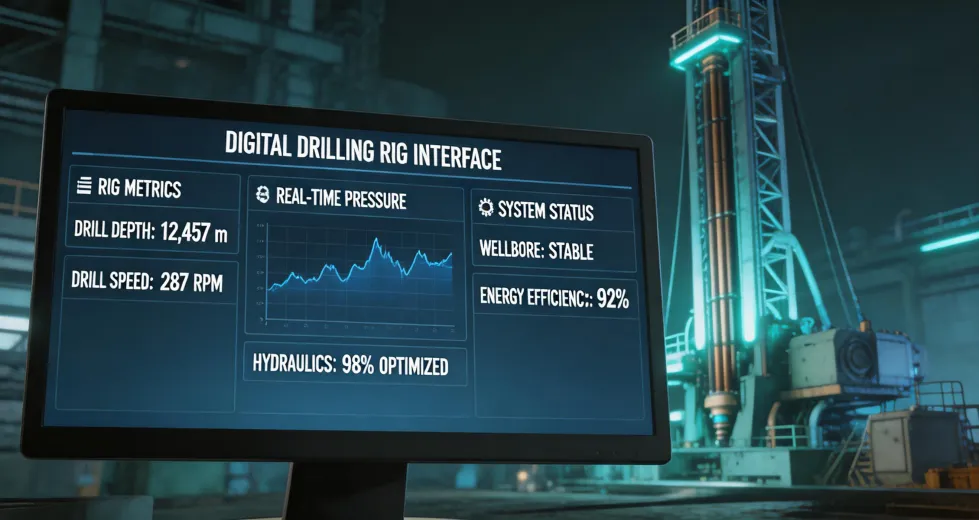
6. What about their digital solutions? Are they worth the hype?
-
7. Should I be worried about the Baker Hughes 'identification chart' being wrong?
-
1. Why should I care about the 'Baker Hughes U.S. Oil Rig Count' (e.g., August 29, 2025)?
Baker Hughes FAQ: The Questions You Should Actually Be Asking (From an Admin Buyer's Perspective)
I manage purchasing for a mid-sized oilfield services company. We spend roughly $1.2M annually across 8 different vendors for everything from drilling consumables to repair parts for our wireline units. When I took over this role in 2020, I learned fast that knowing the difference between a provider and a partner is expensive if you get it wrong.
So, when we talk about industry giants like Baker Hughes, the questions I field from our operations team aren't about market cap. They're about practical stuff: rig availability, service consistency, and whether their digital tools actually save us time. Here's my FAQ on the things that matter when you're the one placing the order.
1. Why should I care about the 'Baker Hughes U.S. Oil Rig Count' (e.g., August 29, 2025)?
If you're an admin buyer or a field engineer, you care because the rig count is a direct driver of supply and demand for equipment and personnel. A high count (say, a release on August 29, 2025) means more competition for parts, longer lead times for wireline services, and harder scheduling.
I look at this number to adjust my ordering cadence. If the count is rising, I place orders for critical Baker Hughes spindles or VFD components earlier—like, 3 months out instead of 6 weeks. It's not a perfect science, but it's been a reliable rule of thumb since 2022.
2. What exactly is 'Inside Baker Hughes Achieve'? Is it just a marketing program?
Honestly, when I first heard the name, I rolled my eyes. I'm an admin buyer—I don't have time for slogans. But after digging into it for a vendor assessment in 2024, I saw the practical angle.
'Achieve' seems to be their integrated service delivery model. It's not a specific product you order. It's the framework they use to coordinate their own teams—drilling, wireline, and completions—so they don't step on each other's toes on your site. For me, the value is reduced change-order paperwork. If their internal processes are smoother, I get fewer surprise invoices for 'coordination delays.' This gets into their service territory, which isn't my expertise on the engineering side, but from a procurement perspective, it means cleaner billing.
3. I need an 'Identification Chart' for Baker Hughes parts. Are these standard?
Oh, I have strong feelings on this. Looking back, I should have insisted on better documentation from the start. At the time, I just trusted the part numbers on the invoice.
Baker Hughes does provide identification charts for their major equipment families (think: wireline tools, drilling assemblies). But here's the catch—the 'standard' depends on the decade the equipment was built. A part from a 2018 rig might use a different ID system than a 2022 unit. I've found their digital catalog to be pretty good, but only if you have the original serial number.
- My advice: Don't rely on memory. I still kick myself for not photographing the ID plate on a critical motor. If you're managing spares, ask your Baker Hughes field rep for a cross-reference PDF. It's not a formal document you can download publicly, but they can generate it.
4. Who (or what) is 'Miranda' in a Baker Hughes context? I keep hearing this term.
This is one of those questions that makes you feel like you missed a meeting. I asked the same thing during a shift handover in 2023. I want to say it's a software platform—but don't quote me on the exact version.
From what our wireline supervisor told me, Miranda is a data analytics tool used for real-time decision making during well operations. It's not something I order or see on a PO. It's a part of their digital solutions suite. If you're in operations, it's their tool for optimizing pump rates or predicting tool failures. For an admin buyer, just know it exists; it affects how their engineers bill for 'data analysis' versus 'execution time.' I have mixed feelings about digital tools like this—they offer great insights (better for the project) but sometimes create vague line items on invoices that finance hates reconciling.
5. Is the higher price for faster Baker Hughes turnaround worth it? (The 'Time Certainty' Question)
Yes. Unequivocally, yes—in a crisis. In March 2024, we paid $400 extra for rush delivery on a Baker Hughes wireline head. The alternative was missing a $15,000 day-rate commitment. The gamble wasn't the speed; it was the certainty. Their 'standard' delivery window seemed safe. It wasn't.
After getting burned twice by 'probably on time' promises from a smaller vendor, we now budget for guaranteed delivery on mission-critical parts. The cost of uncertainty is higher than the premium. If you can wait 3-4 weeks, standard is fine. If the rig is waiting, pay the premium and sleep better.
6. What about their digital solutions? Are they worth the hype?
Part of me wants to say 'depends on your field engineer's skill level.' Another part knows that the data they provide can save us 6 hours of manual reporting a week. Their digital solutions (like the BHC3 platform or their Leucro logging software) aren't 'products' you buy off a shelf. They're subscriptions that require a commitment from your crew to learn the interface.
But here's the practical win: I should add that their digital invoice reconciliation tool—part of their digital ops—cut our accounting team's error rate by 40% in the first quarter we used it. That's a win for admin buyers like me who hate chasing PO mismatches.
7. Should I be worried about the Baker Hughes 'identification chart' being wrong?
Yes, but only for very old legacy equipment. Industry standard for asset identification is moving toward serialized digital records. Baker Hughes is big on this. If you're buying parts for a unit built before 2015, you might find the chart doesn't match the physical part (often due to undocumented field modifications). I've had the experience of ordering a $500 seal kit that didn't fit because the chart was from the original design, not the 2018 revision.
- My workaround: Ask for the 'physical verification' service. Their field engineer can take a photo and confirm the ID against their internal database. It's a 30-minute job that saves a week of returns.