Before I answer the weird stuff: why this needs a procurement view
I'm a procurement manager at a 60-person energy services company. I've managed a $2.4M annual supplier budget for eight years, reviewed more than 400 vendor quotes, and signed off on contracts ranging from drilling-rig support to laptop fleets. So when I get asked about a company like Baker Hughes, I don't start with brand reputation. I start with total cost and financial stability.
My experience is mostly with mid-market energy service suppliers, not supermajors. If you're at a different scale, your risk tolerance will be different. But the questions below are the ones people actually ask.
What exactly does Baker Hughes do?
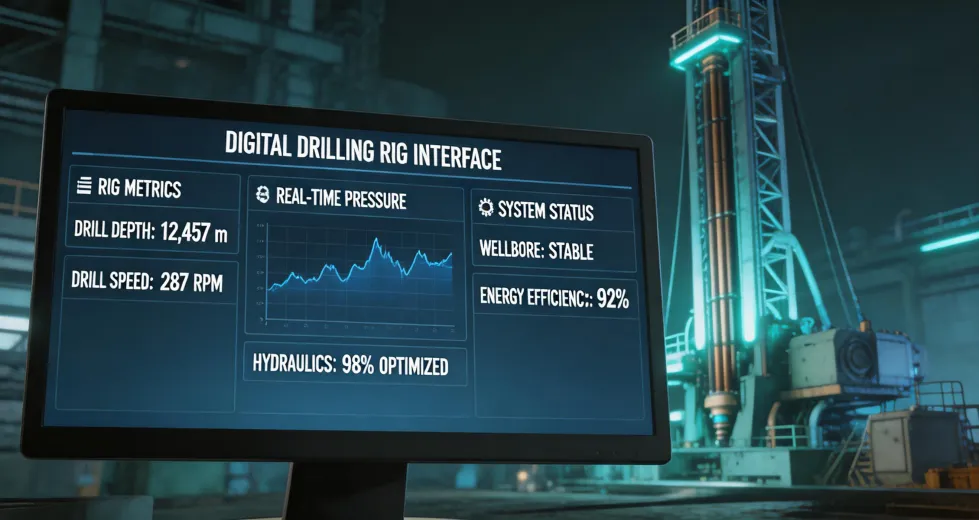
Baker Hughes is an energy technology company. It sells and services oilfield equipment, drilling rigs, wireline services, process systems, turbomachinery, and digital software for oil and gas operations. If you work in the upstream side of the energy industry, you've probably seen their hardware at a well site or their digital dashboards in a headquarters.
What I care about as a buyer is that Baker Hughes is not just a parts vendor. It's a systems supplier. That means you're buying engineering, installation, training, and ongoing support. The price never tells you much until you know what's included.
What is Baker Hughes' net worth?
Net worth can mean two different things for a public company.
- Market capitalization: It's the share price multiplied by shares outstanding. For Baker Hughes (ticker: BKR), that was roughly $35–$40 billion as of early 2025. I'd verify the current quote because market cap changes daily.
- Stockholders' equity: This is what's left after subtracting liabilities from assets—closer to the accounting net worth. Based on Baker Hughes' most recent quarterly filings, that's been around $24–$26 billion.
Both numbers are public. The company files with the SEC, so you can read the latest 10-K at investor.bakerhughes.com. For a procurement decision, I usually watch both, but I do not treat either one as proof of service quality.
Everything I'd read about supplier financials made me think net worth was the safest filter. In practice, I've seen a financially solid vendor deliver poor support, because they knew I had too much downtime to switch. Net worth tells you a company can survive; it doesn't tell you they'll fix your problem at 2am.
What is the IT rotational program at Baker Hughes?
Baker Hughes runs a graduate-style information technology rotational program, sometimes called an IT leadership development program. It's built for early-career tech professionals. In a typical setup, you spend 12 to 24 months rotating across areas like IT infrastructure, cybersecurity, data analytics, digital product management, and operational technology.
Third-party salary reports, like Glassdoor from 2024, put U.S. IT rotational program compensation somewhere around $70,000–$90,000. But that is self-reported and varies by location and degree. The offer letter you actually get is what matters.
I've hired people who came out of rotational programs at large industrial companies. The strong ones had three things: a named mentor, a real performance review after each rotation, and a project that touched actual business operations. The weak ones were essentially cheap labor rotated around departments until someone tolerated them.
What should you ask before joining a rotational program?
Ask about:
- Rotation schedule and whether it's fixed or depends on headcount.
- How many previous participants converted to full-time roles.
- Who evaluates your performance after each rotation.
- Whether relocation and travel costs are covered or deducted from your salary.
In my experience, a rotational program is a form of procurement. The company is buying a pool of future talent. You are buying training and credibility. Make sure the total package—salary, learning value, and conversion probability—adds up to more than a standard entry-level IT role. If it doesn't, the title rotational won't pay your rent.
Who is Chris White at Baker Hughes?
This question is kind of a web trap. There are many Chris Whites. One might be a Baker Hughes employee somewhere in the business, but I can't verify employment details for individuals. As of early 2025, there is no Chris White listed in Baker Hughes' C-suite or on the public executive leadership page.
If you're checking someone who claims to be Chris White from Baker Hughes, verify their company email domain. A legitimate Baker Hughes contact will have a @bakerhughes.com address. I've seen fake vendor contacts use a real-sounding name to get a purchase-order approval. That's why our procurement system now requires a company-domain email and a vendor bank account in the same country as the contract.
So: Chris White? The answer is I don't know which one you mean. That's a better answer than making one up.
What is Simparica?
Simparica is a prescription chewable tablet used to control fleas, ticks, and other parasites in dogs. It contains sarolaner, a compound that works on the nervous system of parasites. It's made by Zoetis, a global animal health company. Simparica Trio adds heartworm prevention and intestinal parasite coverage.
Why would Simparica appear next to Baker Hughes in a search query? Probably because someone searched Chris White and then looked up a dog medication, or because a search engine clustered unrelated terms. In my cost-tracking spreadsheet, veterinary costs are a completely different category from oilfield equipment. But I'll still give you the procurement version:
I compared single-dose pricing for an 80-pound dog in Q4 2024. Online pharmacies were roughly $20–$28 per dose; a local vet charged about $30–$35. Prices as of March 2025, and they will vary by weight and pharmacy. Simparica is not an OTC product—it needs a prescription—so the cheap knockoffs you see on marketplace sites are not the same product and are not worth the risk.
What should you actually check before signing a contract?
I ask four things before I sign anything:
- What is the total cost over 3 years, not just the first invoice?
- Who is the named support contact and how do I verify them?
- What happens if a deliverable is late or needs rework?
- What does the exit clause cost?
The company name, net worth, or program title won't answer those questions. A vendor with a recognizable logo can still pad invoices; a rotational program can still leave you without a mentor; a dog medication can still be counterfeit if you buy it from the wrong source. I'm not saying always choose the biggest or the most established option. I'm saying calculate the total cost and verify the people before you commit. That's how I caught a $4,500 hidden fee in a contract that looked 15% cheaper than the next quote.