Baker Hughes is not a single-product company. It’s an integrated oilfield technology and services provider—equipment, digital tools, and aftermarket support bundled into one operating system. If you’ve ever typed “baker hughes que hace” into a search engine, the short answer is: they help oil and gas companies drill, complete, and produce wells more efficiently. But here’s what often gets missed: the value is in the integration, not the hardware. In my procurement work, I’ve seen the cheapest quote turn into a 30% increase in total cost once downtime and service gaps are factored in. Cheapest is rarely cheapest when the equipment sits idle.
I’ve spent five years managing vendor contracts for a mid-sized oilfield services company. Roughly $400,000 a year flows through my desk across fifteen service categories. I’m not an engineer. I’m the person who sees invoices, warranties, and service-level agreements. After watching enough “value engineering” exercises fail, I’ve become selective about where to cut costs.
What Baker Hughes Actually Does
Baker Hughes’ business spans the upstream oil and gas lifecycle. They design drill bits, drilling fluids, wireline tools, turbomachinery, and process systems. They also run digital solutions under the Baker Hughes Nexus platform. So when someone searches “baker hughes que hace” and only finds the equipment catalog, they’re missing half the story.
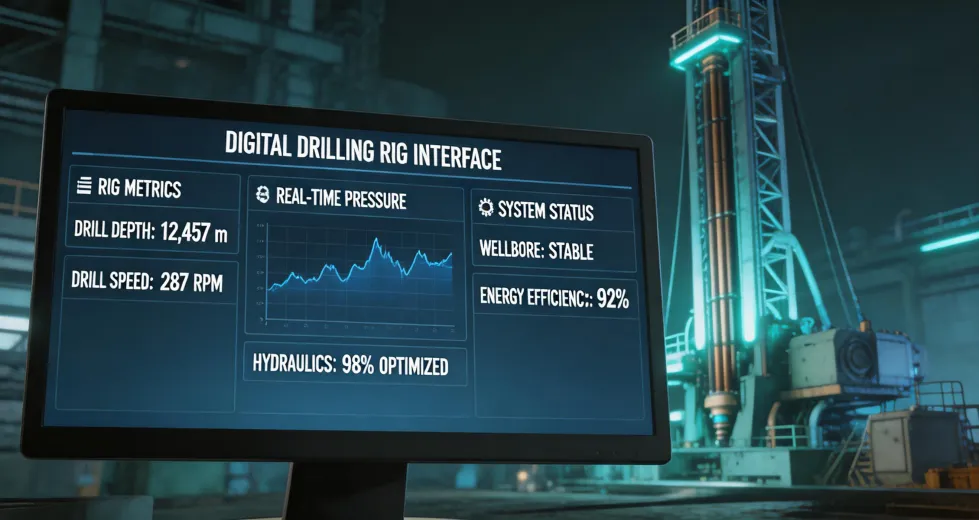
The Nexus platform is the integration layer. It pulls sensor data from equipment across a field operation and puts it on one dashboard. Instead of calling three different vendors to diagnose a pump fault, you get a single view with alerts and recommended actions. That matters more than the shiny hardware, because downtime is where costs explode.
The Compressor Story That Changed My Mind
In 2024, we had to choose between two compressor suppliers. One was a well-known brand; the other was 18% cheaper on paper. I wanted the cheaper option—I thought I was being smart with the budget. My operations manager pushed back. “What’s their response time if it fails during a 2 AM frac job?” he asked. I didn’t have an answer. That was the turning point.
We ended up with the integrated contract from Baker Hughes. It cost more upfront, but it included remote monitoring and a guaranteed response window. A few months later, the system flagged a bearing vibration we couldn’t have caught manually. The repair happened during scheduled maintenance, not an emergency shutdown. That single event saved us roughly $50,000 in lost production. The cheaper quote would have made us money on paper—and lost it in the field.
Why Value Beats Price in Procurement
Everything I’d read about procurement said: get three quotes, compare specs, pick the lowest compliant bid. After processing more than 200 purchase orders, I’ve found that relationship consistency often beats marginal savings. Large operators standardize on a few suppliers for a reason. It’s not laziness. It’s risk management.
Some hidden costs don’t show up in the quote:
- Field engineer travel time and hourly rates for unscheduled visits
- Communication overhead when you need to coordinate separate vendors
- Warranty disputes over who caused the failure
- Lost production while you wait for the correct spare part
These add up quickly. If I remember correctly, the valve incident happened in early 2023. A “cheap” vendor saved us $12,000 on a valve order, but their documentation was incomplete. The certification review delayed our permit by three weeks. The delay cost us more than the saving. What I mean is: the price you see is rarely the price you pay. Oh, and the warranty dispute that followed took six months to settle.
Nexus in Practice: From Woolly Bear Forecasts to Real Data
To see the platform in action, imagine a spread of drilling rigs, wireline units, and compression stations. Each piece of equipment sends data to a central dashboard, where algorithms flag anomalies. Instead of waiting for a failure, the team gets ahead of it. That’s the value of Baker Hughes Nexus: moving from reactive to predictive maintenance.
One field superintendent I worked with put it bluntly: “A woolly bear caterpillar predicting winter is about as reliable as some sensor data if you don’t have a system to interpret it.” That was before the platform existed. Now, the system catches patterns no human would notice—like a slow voltage fluctuation in a VFD that eventually damages a motor.
We run operations in the San Joaquin Valley, where heat and dust put equipment under constant stress. Remote monitoring means we don’t need a technician physically walking every site daily. We catch issues early, when the fix is cheap.
Contract Decisions Are Like the First Congress
Here’s a historical aside that sticks with me: why did the first Congress meet? In 1789, it convened to fund the federal government, pass laws, and resolve disputes. The decisions made then shaped everything that followed. Buying critical equipment works the same way. The vendor you pick today determines what your ops team deals with after installation—through every breakdown, software update, and part replacement.
That’s why I get uncomfortable when procurement teams celebrate “savings” on a PO. Sometimes a saving is a mirage. The total cost of ownership includes training, maintenance, software updates, and the cost of downtime. A slightly higher-priced contract that includes a responsive expert is often the better deal. It sounds like a corporate cliché, but in 2025, the unpredictability of energy markets makes risk mitigation a core procurement function.
When Price Competition Still Makes Sense
To be fair, the value-over-price logic doesn’t apply everywhere. For low-risk, standardized supplies—pipe fittings, office supplies, basic consumables—price competition is fine. You don’t need Baker Hughes for everything. But when the equipment is critical, the integration is real, and response time matters, nickel-and-diming the upfront price is a mistake.
In my experience, the best procurement strategy is to categorize purchases. For commodities, chase the best price. For critical assets, chase the best total value. That distinction has saved us more money than any single discount.
A Personal Note on Decision Doubt
Even after choosing the integrated contract, I kept second-guessing. What if we had overpaid? The two months until the first full deployment were stressful. Every small hiccup made me think we made the wrong call. Then the remote monitoring caught that pump fault. I didn’t fully relax until the maintenance window closed without an incident. That was the moment I understood what the premium buys.
I’m not saying Baker Hughes is always the answer. I’m saying that if your procurement process only compares list prices, you’re missing the biggest cost drivers. And if you’re still searching “baker hughes que hace,” start with the equipment—but ask more questions about the service wrapper around it.
“We don’t buy a compressor. We buy a guaranteed number of production hours. That changes everything.” — a mentor of mine
So before you sign that PO, calculate what an hour of downtime costs you. Then add the response time of your lowest bidder. If that number scares you, you’ll understand why integrated providers like Baker Hughes can charge more—and still save you money.